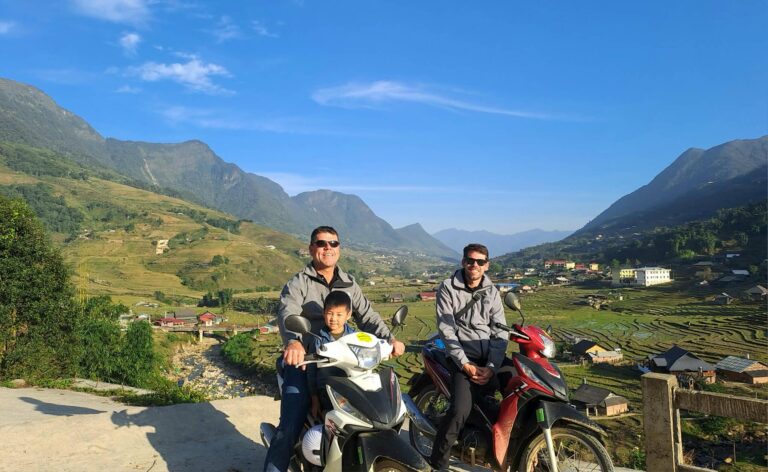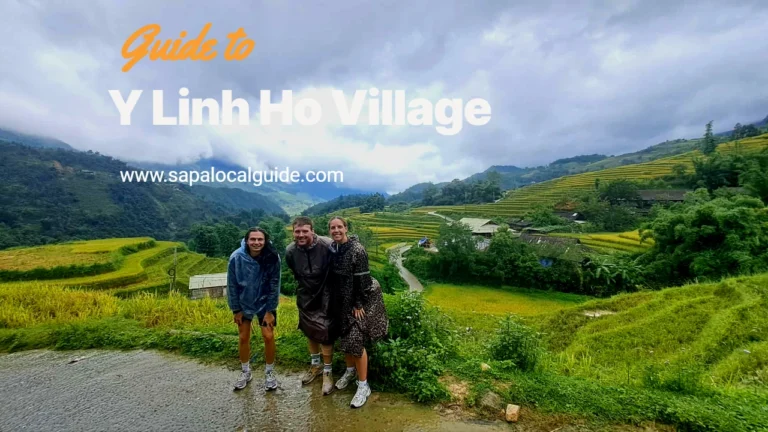
Authentic Experience of Sapa
From barefoot childhood in Sapa’s mountains to a trusted local trekking guide, Ly A Pao shares the real stories, culture, and soul of authentic Sapa.

Some journeys don’t begin with big dreams,
but with a very small wish: to have enough food to eat and warm clothes to wear.
Amid the mist and mountains of Sapa, where children grow up with mud on their feet and biting cold in their bones, there was once a Black H’Mong boy who walked barefoot along slippery mountain paths carrying with him a quiet determination to change his life through education and an unbreakable will.
Today, that boy has not only found his own path, but has become a guide leading travelers deep into the true heart of Sapa, where nature, people, and real life stories meet with honesty and soul.
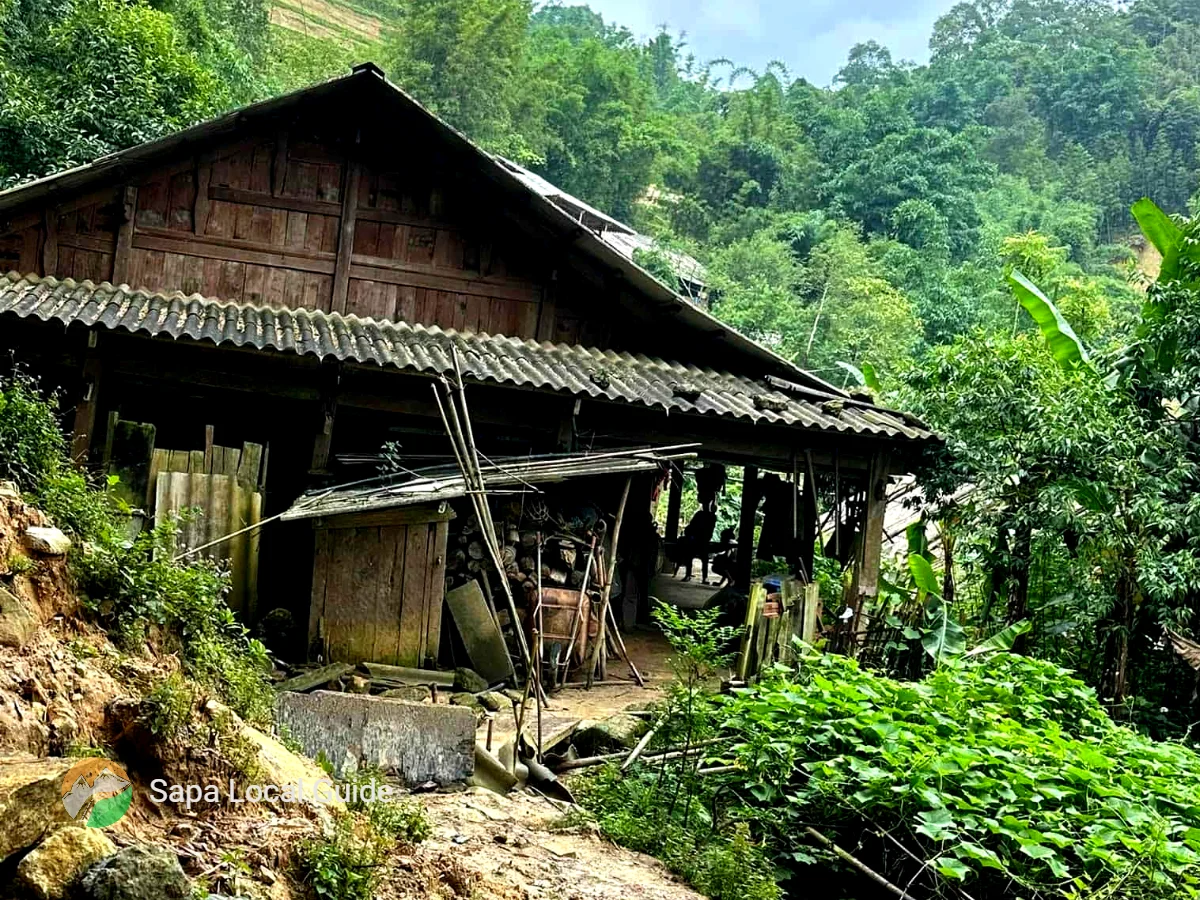
I am a Black H’Mong man, born and raised in Ban Ho Commune, a small village nestled at the foot of the Hoang Lien Son mountain range, in Sapa, Vietnam.
My childhood was shaped by forests, terraced fields, misty mornings, and muddy roads during the rainy season. It was not a gentle childhood like the ones in books it was filled with hardship and struggle, but also with deep love and connection.
I was born into a poor farming family with 11 siblings. Life back then was extremely difficult. We lacked almost everything from food and clothing to the smallest things that many other children take for granted.
Winters in Sapa are harsh. The cold cuts deep into your skin. But we didn’t have proper warm clothes, nor decent shoes to protect our feet. Sometimes, even a full meal felt like a luxury.
My parents survived through sheer hard labor working the fields, growing corn, cassava, and sweet potatoes saving every tiny coin to feed us and, somehow, send us to school.
Despite the poverty, our home was full of love.
We may not have eaten well or dressed warmly, but we grew up protected by our parents’ care and the close bond among siblings.
After school, my brothers, sisters, and I would run to the fields to meet our parents. We excitedly shared stories from school small things, but full of childhood dreams. Those moments remain deeply etched in my memory simple, honest, and warmer than anything else.
I was the eldest son and also the most mischievous. Being the oldest meant carrying responsibility early: herding buffalo, cutting grass, digging soil, carrying firewood. I became familiar with hard labor at a very young age, always covered in dirt and mud.
At school, some kids called me “Mèo” (a derogatory term), mocking my dirty face and worn-out clothes. Those words hurt but they also taught me resilience and strength.
In return, growing up in the fields made me strong and fast. I was especially good at running. During school games, many classmates would choose me for their team. Those moments taught me something important:
Every child has value if they are given the chance to shine.
Throughout those difficult years, I didn’t dream big.
I had only one simple wish:
That one day, my family and I could eat enough and wear warm clothes.
That small dream became my greatest motivation to study. I believed education was the only way out of poverty.
I still vividly remember my first pair of plastic sandals a gift from my teachers. It was the first new footwear I had ever owned. I treasured them deeply.
I wore them only to school.
After class, I carefully put them away and returned to my old, torn sandals. When they broke, I tied them with scraps of fabric until they could no longer be used.
Those sandals were more than just shoes.
They were memory, motivation, and a reminder to never give up.
The First Sweet Fruit Sapa Boarding School
My perseverance was finally rewarded.
I earned a scholarship to attend Sapa Ethnic Minority Boarding High School, a school reserved for the most outstanding students.
For me, it was a dream come true.
For my parents, it was a moment of immense pride.
I studied with everything I had, always remembering my original dream to eat enough and stay warm. I completed high school and nurtured a bigger ambition: to study Law at university.
I wanted to understand the law to help my family and protect vulnerable people like my younger self.
But life doesn’t always go as planned.
Due to financial hardship, I couldn’t pursue my dream of studying Law at university. Instead, I enrolled in a Law Intermediate Program in Lao Cai City, paying with whatever little money I could manage hoping to continue to university someday.
After graduation, I worked briefly at the People’s Committee of Ban Ho Commune. But my family was still struggling, my younger siblings still needed support, and I had to give up the chance to continue higher education.
It was a painful decision.
But I understood that sometimes, personal dreams must be sacrificed for family responsibility.
Leaving Home Starting From Zero
I decided to leave my village and move to Sapa town to find work.
It was the first time I truly stepped out of my family’s protection to face life on my own.
I started from zero actually, less than zero.
With nothing but survival instinct and determination, I took the first job I could find: hotel housekeeping.
During the day, I cleaned rooms, mopped floors, changed bedsheets quietly.
At night, when everyone slept, I taught myself English alone, with an old phone and a few notebooks.
For years, I listened nonstop and joined every free English class I could find, taught by foreign volunteers at local homestays. I never missed a single opportunity.
I couldn’t afford language centers, so I learned by:
For three straight years, my life followed one cycle:
work – study – sleep very little.
I slept only 2-3 hours a night but I never allowed myself to quit. I knew that if I stopped, I would stay stuck forever.
The Reward of Persistence My First 5-Star Hotel
My English gradually improved. Management noticed my effort, trusted me, and promoted me to the front desk.
Eventually, I became a professional receptionist at Pao’s Sapa Leisure Hotel (5-star) a place I had never dared to imagine working in.
For the first time, I truly felt:
A poor highland child can rise if they never give up.
The job was stable, the environment professional, the income decent but my heart didn’t belong there.
I realized I wasn’t born to stand behind a counter in a suit.
What I truly wanted was:
I wanted visitors not just to see Sapa but to feel it.
A Turning Point When I Believed in Myself
The journey through hardship turned my wounds into strength.
Those difficult years:
Especially after meeting Mr. Hoang HXN, who taught me about freedom, entrepreneurship, and self-expression “Being – Having – Doing” my mindset completely changed.
I learned that:
The past does not decide the future. What matters is whether you dare to move forward.
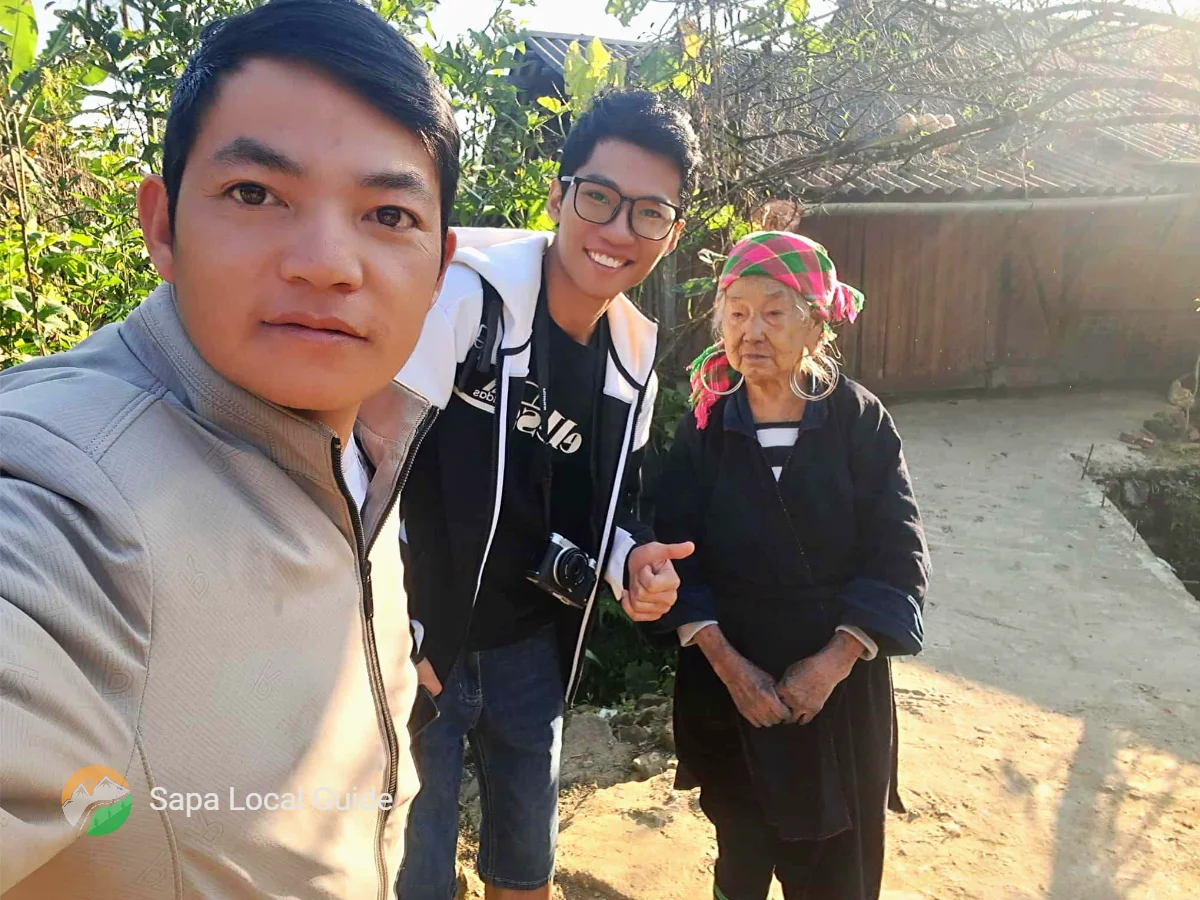
I left the hotel and returned to the mountains where I was born.
I became a local trekking guide.
Not a guide who reads scripts but:
I take travelers:
They experience the authentic cultures of:
Black H’Mong, Red Dao, Tay, Giay, and Xa Pho
in Muong Hoa Valley the cultural heart of Sapa.
Travel Is Not Just a Trip It Is Healing
I believe travel can change people.
Not only to relax, but to:
For me, tourism also healed a child who once felt hungry, cold, and insecure.
By respecting what we already have:
I not only changed my own life,
but also created livelihoods for local communities.
To me, Sapa is not just a destination.
Sapa is a place to:
I am here to share the true soul of Sapa no decoration, no exaggeration, only honesty.
An Invitation from My Heart
If you are someone who:
Then don’t hesitate.
Let me guide you to the heart of Sapa not only with my feet, but with my soul.
This blog, these treks, and I myself were created to offer you the most authentic experiences possible.
I am Ly A Pao a Black H’Mong child who once wished only to eat enough and stay warm,
now a guide for meaningful journeys with Sapa Local Guide.
If you’ve read this far, I believe we will meet on a narrow trail to a mountain village,
or on a trekking path through golden rice terraces woven into the villages of Northwest Vietnam.

Complete with itinerary, destinations, food, accommodation and tips!